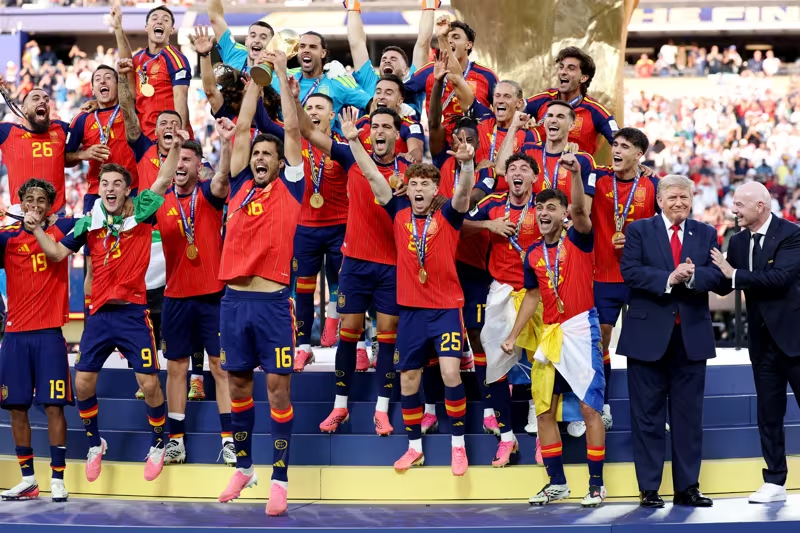
𝐒𝐏𝐀𝐈𝐍: 𝐖𝐎𝐑𝐋𝐃 𝐂𝐇𝐀𝐌𝐏𝐈𝐎𝐍𝐒 𝐅𝐎𝐑 𝐓𝐇𝐄 𝐒𝐄𝐂𝐎𝐍𝐃 𝐓𝐈𝐌𝐄! 🇪🇸🏆⭐️⭐️
Torres Fires Spain to the Top of the World
Published: July 19, 2026
Ferran Torres became Spain’s national hero after scoring the winning goal in extra time to defeat Argentina 1-0 and secure the country’s second FIFA World Cup title.
Spain 1-0 Argentina
⚽ Goal: Ferran Torres, 106′ 🏟️ New York New Jersey Stadium ⭐ Player of the Match: Ferran Torres
Spain are champions of the world for the second time in their history after Luis de la Fuente’s side defeated defending champions Argentina in Sunday’s FIFA World Cup 2026 final.
Although Spain controlled the match from beginning to end, they had to wait until the 106th minute to finally beat Emiliano Martínez.
Pedro Porro delivered a cross toward the far post, where Nico Williams headed the ball back across goal. Torres met it with a powerful first-time finish, sending the ball into the roof of the net and Spain to the summit of world football.
Argentina’s challenge became even more difficult when Enzo Fernández received a second yellow card near the end of normal time. Despite being reduced to 10 players, Lionel Scaloni’s team continued fighting until the final whistle.
As in the 2010 World Cup final, Spain found their winning goal in extra time.
Spain Control the Final
The contest brought together the champions of Europe and South America, the two highest-ranked national teams in the world and two sides that had reached the final without losing a match.
Spain created the first significant opportunity after only five minutes. Dani Olmo found Lamine Yamal in space on the right side of the penalty area, but the teenager’s low shot was stopped by Martínez at the near post.
La Roja dominated possession but initially struggled to break through Argentina’s deep and disciplined defence. Before halftime, Mikel Oyarzabal tested Martínez, while Marc Cucurella dragged another attempt wide.
Argentina coach Lionel Scaloni was also forced to make two changes in central defence. Lisandro Martínez was replaced by Nicolás Otamendi shortly before halftime, while Facundo Medina came on for Cristian Romero after 70 minutes.
Spain continued to increase the pressure. Yamal created an excellent chance for Torres in the 67th minute, but the forward directed his header too close to Martínez.
Pau Cubarsí, Pedri and Nico Williams also forced saves from the Argentina goalkeeper. Martínez then produced a flying stop to deny Yamal from a free kick at the end of normal time.
Argentina had scored 19 goals on their way to the final, but Spain’s control was so complete that La Albiceleste did not register their first attempt until extra time.
Torres Delivers the Historic Moment
The pattern continued during extra time. Martínez saved a header from Williams, while Mikel Merino sent another opportunity wide. Both Williams and Torres also had goals disallowed.
However, there was no denying Torres in the 106th minute.
Williams headed Porro’s cross back into the danger area, and Torres produced the defining finish of the final—firing Spain to their second World Cup crown.
Historic Records for Spain
Spain completed one of the most dominant defensive campaigns in World Cup history:
Spain conceded only one goal during the tournament—the fewest ever by a World Cup-winning team in a single edition. Unai Simón recorded seven clean sheets, setting a new World Cup record. Lamine Yamal and Pau Cubarsí, both 19, became the fourth and fifth teenagers to play in a World Cup final. Like Pelé in 1958, Giuseppe Bergomi in 1982 and Kylian Mbappé in 2018, both finished on the winning side. At 65 years and 28 days, Luis de la Fuente became the oldest coach to win the World Cup. He surpassed fellow Spaniard Vicente del Bosque, who was 59 years and 220 days old when Spain won its first title in 2010. Spain became the first nation to hold both the men’s and women’s World Cup titles simultaneously, following the women’s national team’s triumph in 2023. La Roja extended their unbeaten run in regulation time to 38 matches—29 victories and nine draws—surpassing Italy’s previous record of 37 matches for a European national team. More History for Lionel Messi
Despite the painful defeat, Lionel Messi added two more records to his extraordinary career.
At 39 years and 25 days, he became the oldest outfield player to appear in a World Cup final, surpassing Sweden’s Gunnar Gren, who was 37 years and 241 days old when he faced Brazil in 1958.
Nicolás Otamendi also passed Gren’s mark, becoming the second-oldest outfield player to appear in a World Cup final at 38 years and 157 days.
Messi also became only the second player to feature in three World Cup finals—2014, 2022 and 2026—following Brazil legend Cafu, who played in the 1994, 1998 and 2002 finals.
What They Said
Luis de la Fuente praised a Spanish generation that has now conquered both Europe and the world.
“I feel especially proud of this generation of footballers. They are players with exceptional talent, but they are also a group and a family. Together, we are stronger.”
The Spain coach admitted that Martínez’s outstanding performance forced his team to suffer longer than expected.
“I think the match should have been decided earlier. Dibu’s great saves prevented us from winning sooner, but this was a World Cup final. Even against 10 players, you have to suffer.”
Lionel Scaloni acknowledged that Spain deserved the victory while expressing pride in his Argentina players.
“They were better—that is the truth. But I will hold on to the enormous memory of what these players have achieved. We are great in victory, and we must also be great in defeat.”
Torres dedicated his historic winning goal to the entire Spanish nation.
“The goal was for 47 million people. It wasn’t only mine or for the 26 players here. We stayed faithful to our football, and today we showed that once again.”
From substitute to national hero, Ferran Torres produced the decisive moment that returned Spain to the top of world football.
𝐒𝐏𝐀𝐈𝐍: 𝐖𝐎𝐑𝐋𝐃 𝐂𝐇𝐀𝐌𝐏𝐈𝐎𝐍𝐒 𝐅𝐎𝐑 𝐓𝐇𝐄 𝐒𝐄𝐂𝐎𝐍𝐃 𝐓𝐈𝐌𝐄! 🇪🇸🏆⭐️⭐️