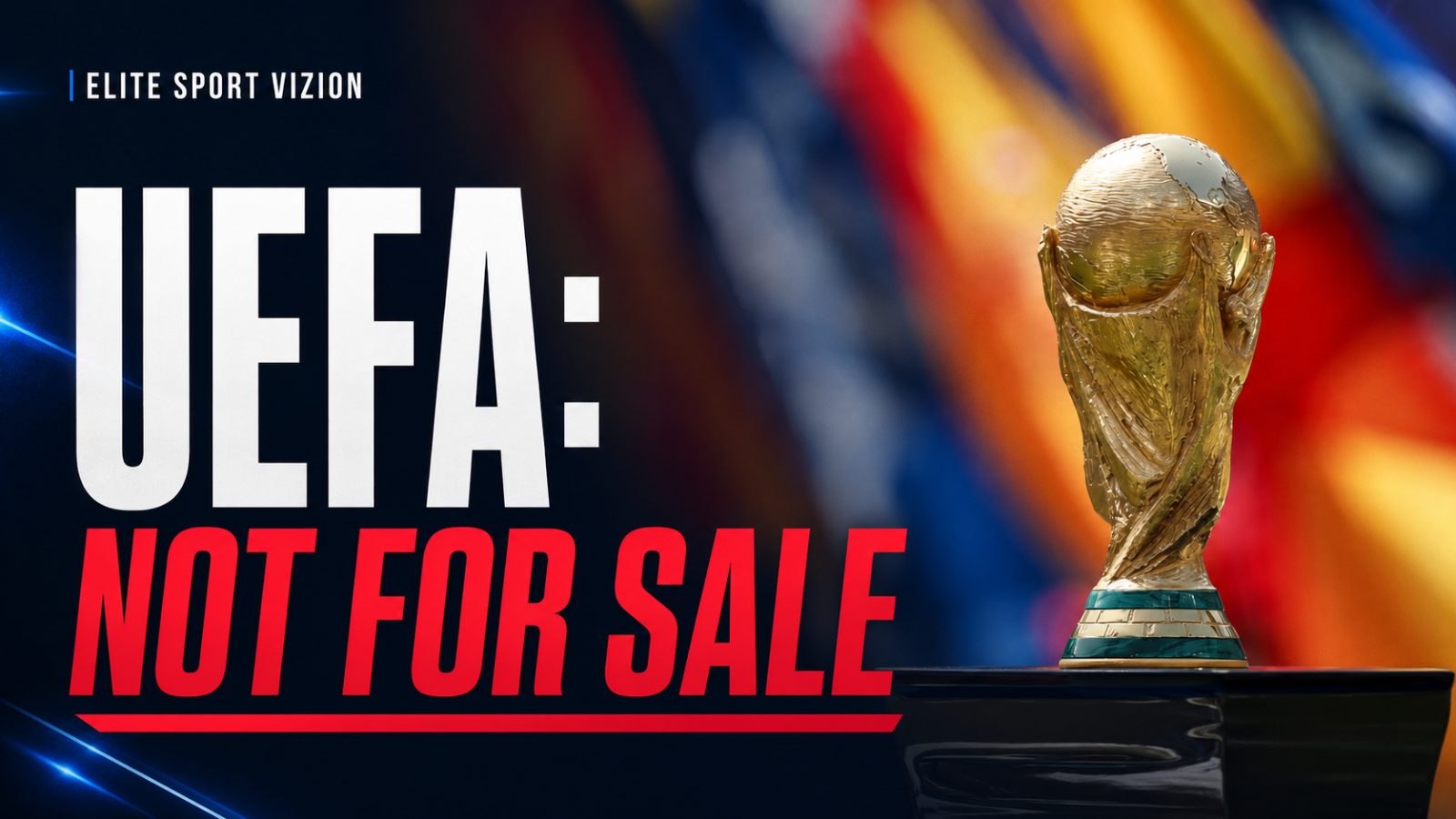
UEFA Says Goodbye to FIFA: Europe Unites Against Infantino’s World Cup Privatization Plan
European football has delivered an unprecedented challenge to FIFA after all 55 UEFA member associations unanimously agreed to boycott future FIFA competitions if Gianni Infantino proceeds with his controversial World Cup privatization plan.
The decision was reached during an emergency virtual meeting held by UEFA on Thursday. European federations declared that their national teams would not participate in FIFA-organized tournaments while the proposal remains active.
The potential boycott would cover the men’s and women’s World Cups, youth competitions and the FIFA Club World Cup.
“The World Cup is not for sale”
At the center of the dispute is FIFA’s proposal to establish a new commercial subsidiary known as FIFA Forward Enterprise.
The company, reportedly valued at approximately $20 billion, would control the commercial operations connected to FIFA competitions, including broadcasting rights, sponsorships, ticketing and licensing.
FIFA plans to raise around $4.2 billion by selling a minority stake of up to 20 percent to private investors. The proposed lead investor is Thrive Eternal, an investment vehicle founded by Joshua Kushner, while J.P. Morgan is advising FIFA on the project.
UEFA and its member associations have strongly rejected the proposal.
“The World Cup cannot be treated as an investment product,” UEFA said in its joint statement. “It is one of football’s greatest sporting legacies. It has been built over generations by players, national teams and supporters across every continent.”
The European governing body added that no part of the competition should be handed over to private investors, declaring emphatically: “The World Cup is not for sale.”
FIFA’s financial offer to national associations
Infantino has asked FIFA’s 211 member associations to consider the plan ahead of a September 19 deadline.
Under the proposal, associations supporting the project could receive an immediate payment of approximately $20 million for football-development programs.
Critics believe the financial incentive places enormous pressure on smaller federations that depend heavily on FIFA funding. UEFA has accused FIFA of failing to provide sufficient transparency and consultation before presenting a plan that could transform the commercial structure of world football.
Infantino has defended the project, describing it as an opportunity rather than an obligation. He insists that FIFA would retain control over football governance, competition rules and sporting decisions.
However, UEFA is demanding that the proposal be withdrawn completely, along with binding assurances that FIFA competitions will never be opened to private ownership.
A historic split in world football
The European boycott could begin affecting FIFA’s upcoming youth tournaments before threatening participation in the 2027 Women’s World Cup and future men’s World Cups.
Without leading European nations such as Spain, France, England, Germany and Italy, FIFA competitions would lose much of their sporting prestige and commercial value.
Broadcasters, sponsors and investors would also be unlikely to commit billions to tournaments missing many of the world’s strongest teams and most recognizable players.
For this reason, UEFA’s united position could force FIFA to abandon the plan before the confrontation reaches the football field.
The dispute represents much more than another disagreement between UEFA and FIFA. It is an open battle over who controls football’s greatest competition—and whether the World Cup should remain a shared sporting institution or become an investment opportunity for private capital.
For the first time, Europe has placed its ultimate weapon on the table.
The message to Infantino is unmistakable: withdraw the proposal—or UEFA will say goodbye to FIFA.Reuters